Treating mental illness in the comfort of an English cottage garden

The SIRIPP project team has made significant progress in our VR therapy project and successfully delivered our first VR prototype! It’s really amazing to see how things have come together. Developing a 3D VR game with professionally generated content and intuitive user interactivities is already a great achievement. We managed to achieve this while integrating nearly the entire clinical procedure of a well-established mental health treatment. With the help of our partners Cardinal Clinic and St Andrew’s Healthcare, the game designer Andy Debus, game developer Murtada Dohan and I spent a lot of time reading and understanding the clinical procedure and experimenting with different game mechanics and visual objects in order to keep the whole VR experience playful and clinically effective at the same time. I believe this is a leap ahead from the “conventional” VR-based exposure therapy.

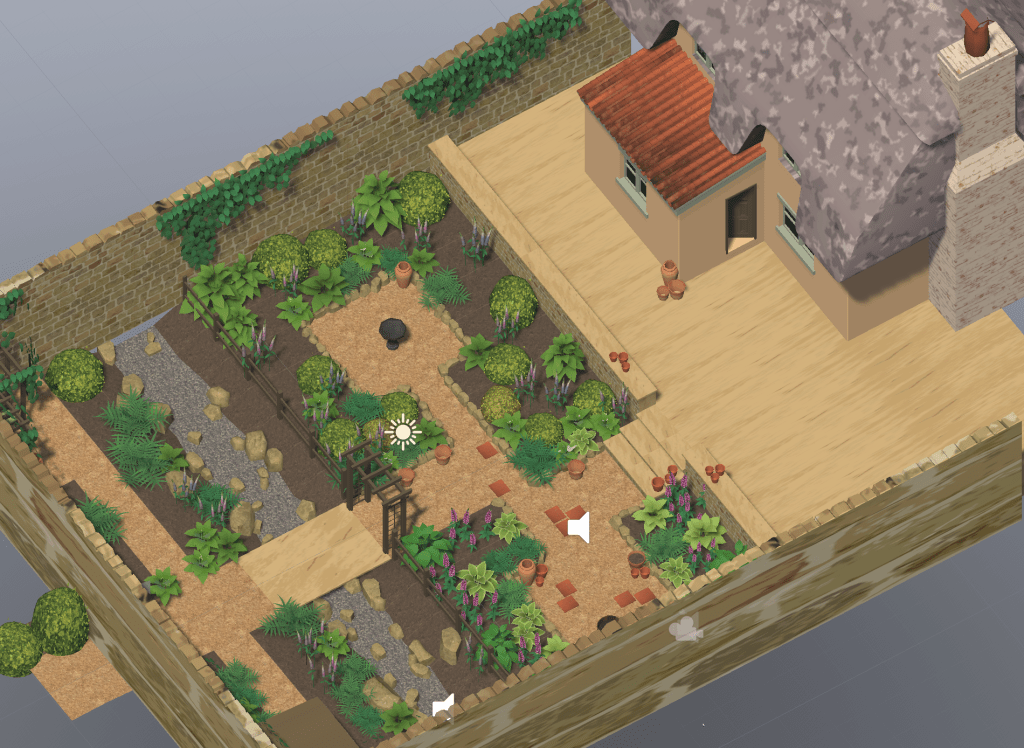
The “game” is set in a bespoke English cottage garden. Patients start their journey by finding themselves sitting on a bench in the back garden. It is a safe place where they can simply relax and be introduced to the therapy. This is also where clinical preparations are completed through some simple gameplay. The main procedures of the treatment are carried out in the cottage. Each room of the cottage will be configured differently to accommodate different preferences or stages of the treatment (We will show the treatment rooms in the future). It might not look like so, but many virtual objects in the scene are interactive and genuinely carry the functions of patient interactions/feedback critical for assessment and treatment.

VR treatment reviewed by a psychologist

While patients perform game tasks, the VR headset tracks a variety of data including eye gaze, gestures, body movements, facial expressions, etc. Our in-game features can respond to the live data feed and help improve the effectiveness of the treatment and potentially protect patients from overwhelming emotions while they process life events. The data will also provide psychologists with some insights into the patient’s responses to the treatment which wouldn’t be available using conventional methods.

More updates to come soon. Feel free to contact me if you’d like to volunteer for our upcoming clinical trials.

UoN Waterside campus in VR?

Screen Shot 2017-02-10 at 16.21.37.png
Creative hub, Waterside campus, The University of Northampton  (All rights reserved)

In the past few months, I have been working with a few colleagues, including Dr Anastasios Bakaoukas and Ewan Armstrong, at Computing on initialising a VR project. The idea is simple: build our new Waterside Campus (due open in 2018) in virtual reality using game development engine so we can all (virtually) walk around on our new site before it’s fully completed in the physical world. So why have we volunteered to do this?

  1. Because we can! Our Game Development/Arts/Design programmes are strong and fast growing. We have expertise in modelling, artistic design and artificial intelligence for developing immersive games.
  2. It can potentially help the University to promote our infrastructure/facilities at the new site to prospective students. To this end, we have worked with the marketing team to understand their needs. The tool could also help improving the visitor/student experience once we move to the new campus.
  3. Using the new campus as the case for teaching. Students can drop their designs or game logics directly into this VR environment and test their work in a unique context.
  4. It will be a great platform for media, AI, and traffic analysis research.

Despite an enormous workload on teaching and marking, the team has worked with an external media company and has committed many many hours transform 3D models for the gaming environment (special thanks to Ewan!). We hope to deliver some interest results very soon!

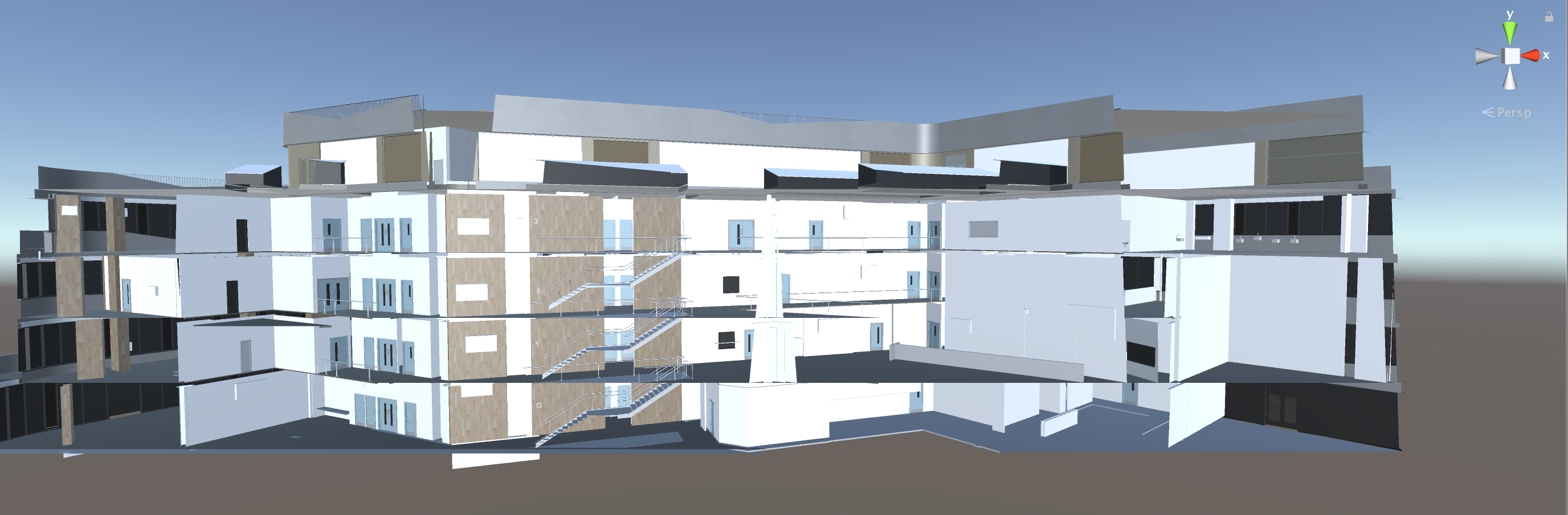
BTW, if you like one of those “cut-in-half” arts, here are some of my takes on the Creative Hub:

Taking a small slice off and you can see some networking space on the left and entrances to blocks of lecture theatres on the right:

screen-shot-2017-02-10-at-16-22-04
Creative Hub, Waterside campus, The University of Northampton (All rights reserved)


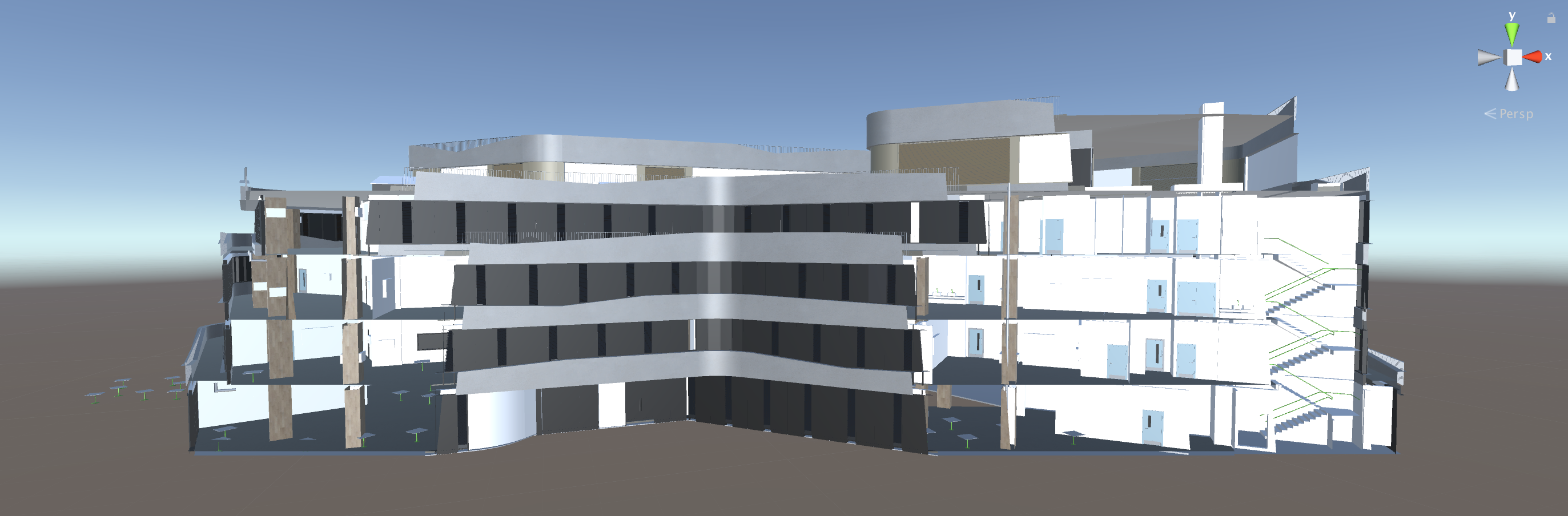
Cutting it further:

screen-shot-2017-02-10-at-16-22-24
Creative Hub, Waterside campus, The University of Northampton (All rights reserved)


It looks like there is a standalone building wrapped inside…

screen-shot-2017-02-10-at-16-22-38
Creative Hub, Waterside campus, The University of Northampton (All rights reserved)

And here is the Engine Shed, a Grade II listed building currently being restored and it will be the home of the Student Union.


Screen Shot 2017-02-10 at 20.18.48.png
The Student Union, Waterside campus, The University of Northampton (All rights reserved)


ACM TVX 2017 WiP CFP online

header_logo-1

Dr Elena Fedorovskaya (Rochester Institute of Technology, USA) and I are organising the Work-in-Progress session of ACM TVX 2017, to be held in the Netherlands this June. The call for paper is now online.

What’s ACM?
Association for Computing Machinery, the world’s largest educational and scientific computing society, delivers resources that advance computing as a science and a profession. ACM provides the computing field’s premier Digital Library and serves its members and the computing profession with leading-edge publications, conferences, and career resources. [1] In the area of computer networks and multimedia, ACM has been very successful in supporting prestigious conferences while IEEE still dominates high impact journals.

What’s ACM TVX?
ACM TVX is the leading international conference for research into online video, TV interaction and user experience. It is the successor of the very successful EuroITV series (technically sponsored by ACM Special Interest Groups). TVX bridges human-computer interaction research (supported by ACM SIGCHI) and technology advancement in multimedia systems (supported by ACM SIGMM). As a multi-disciplinary conference, its aim is to foster discussions and innovative experiences amongst the academic research community and industry. [2]

What’s Work-in-Progress?
WiP encourages researchers, students and practitioners to submit research papers based on their recent viewpoints, new discoveries, and early-stage design and development in disciplines that are in line with TVX’s areas of interest. The WiP session provides a unique opportunity for exchanging brave new ideas, receiving feedback and fostering collaborations. We expect many WiP papers to grow into full submissions in the following iteration of TVX.

What’s new about WiP this year?
This year, we expanded the assessment criteria to include not only scientific impact but also societal, economic and industrial impact. In another word, we want to see something cool but also useful and feasible in practice. We also introduced a Project-in-Progress special track, soliciting contributions from ongoing major research initiatives including European Commission-funded or other similar-scale projects for cross-project discussions.

What’s the h-index and acceptance rate of ACM TVX?
TVX is only 3 years old, so we need to wait a bit longer to see its citation index. It is a highly competitive venue with an acceptance rate of ~25%.

[1] http://www.acm.org/about-acm
[2] https://tvx.acm.org/2017/

We won the Innovation Fund.

http://myvrlearning.wordpress.com

Project title: Transforming online learning experience using virtual reality and gamification.
At UoN, the Innovation Fund has been established by the Vice Chancellor as a way of promoting innovation from amongst staff through the funding of projects which will support Strategic or Operational Plan objectives or whose work contributes towards Northampton’s Changemaker Challenges.

LinkedIn:”You appeared in newscientist.com”

LinkedIn kindly found an article on New Scientist that quotes my comments on near-ultrasound communication (and subsequently spammed all my contacts…). It’s a cool piece of technology and I am glad to praise for its great potential.

https://www.newscientist.com/article/mg23230952-900-tv-shows-could-use-ultrasound-to-send-bonus-extras-to-your-phone/

https://www.newscientist.com/article/2110762-your-homes-online-gadgets-could-be-hacked-by-ultrasound/

Paper accepted by IEEE ICME Grand Challenges

Congratulations, Yusuf.

A Bio-inspired HTTP-based Adaptive Streaming Player (accepted by bitmovin challenge)

The 2016 IEEE International Conference on Multimedia and Expo (ICME 2016) will be held in Seattle, USA from July 11 to July 15, 2016.

The IEEE International Conference on Multimedia & Expo (ICME) has been the flagship multimedia conference sponsored by four IEEE societies since 2000. It serves as a forum to promote the exchange of the latest advances in multimedia technologies, systems, and applications from both the research and development perspectives of the circuits and systems, communications, computer, and signal processing communities. ICME also features an Exposition of multimedia products and prototypes.

Paper abstract (draft):

In order to streamline video content distribution on a myriad of platforms over heterogeneous networks, HTTP Adaptive Streaming (HAS) has been increasingly adopted. In this paper we pilot a bio-inspired HAS optimisation design with the aim to maximise the overall use experiences of a video playback session. Evaluations conducted within a real-world Internet environment demonstrate the benefit of our design using quality indicators such as convergence time, start-up delay, average video rate, stability, and fairness.

A paper in submission for ACM SIGCOMM Workshop on Internet-QoE

ACM SIGCOMM Workshop on QoE-based Analysis and Management of Data Communication Networks (Internet-QoE 2016)

CFP: http://conferences.sigcomm.org/sigcomm/2016/files/workshops/cfp-qoe.pdf

Abstract (draft):
The emerging network paradigm of Software Defined Networking (SDN) has been increasingly adopted to improve the Quality of Experiences (QoE) across multiple HTTP adaptive streaming (HAS) instances. However, there is currently a gap between the research output and reality in this research field. QoE models, which offer user-level context to network management, are often tested in a simulation environment. Such environments do not consider the effects that network protocols, client programs, and other real world factors may have on the outcomes. On the other hand, setting up an experiment that reflects reality is a time consuming process requiring expert knowledge.
This paper shares designs and guidelines of a SDN experimentation framework (SDQ), which offers rapid evaluation of QoE models using real network infrastructures.

A paper is in submission for IEEE Journal of Selected Topics in Signal Processing (J-STSP)

A paper is in submission for IEEE Journal of Selected Topics in Signal Processing (J-STSP) Special Issue on Measuring Quality of Experience for Advanced Media Technologies and Services. This is a piece of work on cross-device media orchestration using web technologies and human factor modelling, which we started in an EU project (with TNO) and I am interested in steering it towards multi-sensory and multimedia IoT. Collaborations are welcome!

Link to CFP: http://www.signalprocessingsociety.org/uploads/special_issues_deadlines/JSTSP_SI_measuring_quality.pdf

Article summarises collective work in EC STEER project

  • STEER: Exploring the dynamic relationship between social information and networked media through experimentation
    (by Sylvie Dijkstra, Omar Niamut, Nikolaos Efthymiopoulos, Spyros Denazis, Nicholas Race, Mu Mu and Jacco Taal
    )

    Abstract:
    With the growing popularity of social networks, online video services and smart phones, the traditional content consumers are becoming the editors and broadcasters of their own stories. Within the EU FP7 project STEER, project partners have developed a novel system of new algorithms and toolsets that extract and analyse social informatics generated by social networks. Combined with advanced networking technologies, the platform creates services that offer more personalized and accurate content discovery and retrieval services. The STEER system has been deployed in multiple geographical locations during live social events such as the 2014 Winter Olympics. Our use case experiments demonstrate the feasibility and efficiency of the underlying technologies.

http://stcsn.ieee.net/e-letter/stcsn-e-letter-vol-3-no-2

Paper to appear in IEEE J-SAC

A paper with the title “A Scalable User Fairness Model for Adaptive Video Streaming over Future Internet” is under recommended revision for IEEE Journal on Selected Areas in Communications (J-SAC) Special Issue on “Video Distribution in the Future Internet” (Publication date: Second Quarter 2016). 

Abstract:

The growing demand for online distribution of high quality and high throughput content is dominating today’s Internet infrastructure. This includes both production and user-generated media. Among the myriad of media distribution mechanisms, HTTP adaptive streaming (HAS) is becoming a popular choice for multi-screen and multi-bitrate media services over heterogeneous networks. HAS applications often compete for network resources without any coordination between each other. This leads to quality-of-experience (QoE) fluctuations on delivered content, and unfairness between end users. Meanwhile, new network protocols, technologies and architectures, such as Software Defined Networking (SDN), are being developed for the future Internet. The programmability, flexibility and openness of these emerging developments can greatly assist the distribution of video over the Internet. This is driven by the increasing consumer demands and QoE requirements. This paper introduces a novel user-level fairness model UFair and its hierarchical variant UFairHA , which orchestrate HAS media streams using emerging network architectures and incorporate three fairness metrics (video quality, switching impact and cost efficiency) to achieve user-level fairness in video distribution. The UFairHA has also been implemented in a purpose-built SDN testbed using open technologies such as OpenFlow. Experimental results demonstrate the performance and feasibility of our design for video distribution over future Internet.

Keywords: Hierarchical resource allocation, adaptive media streaming, QoE utility fairness, network orchestration, software defined networking, human factor